

Introduction
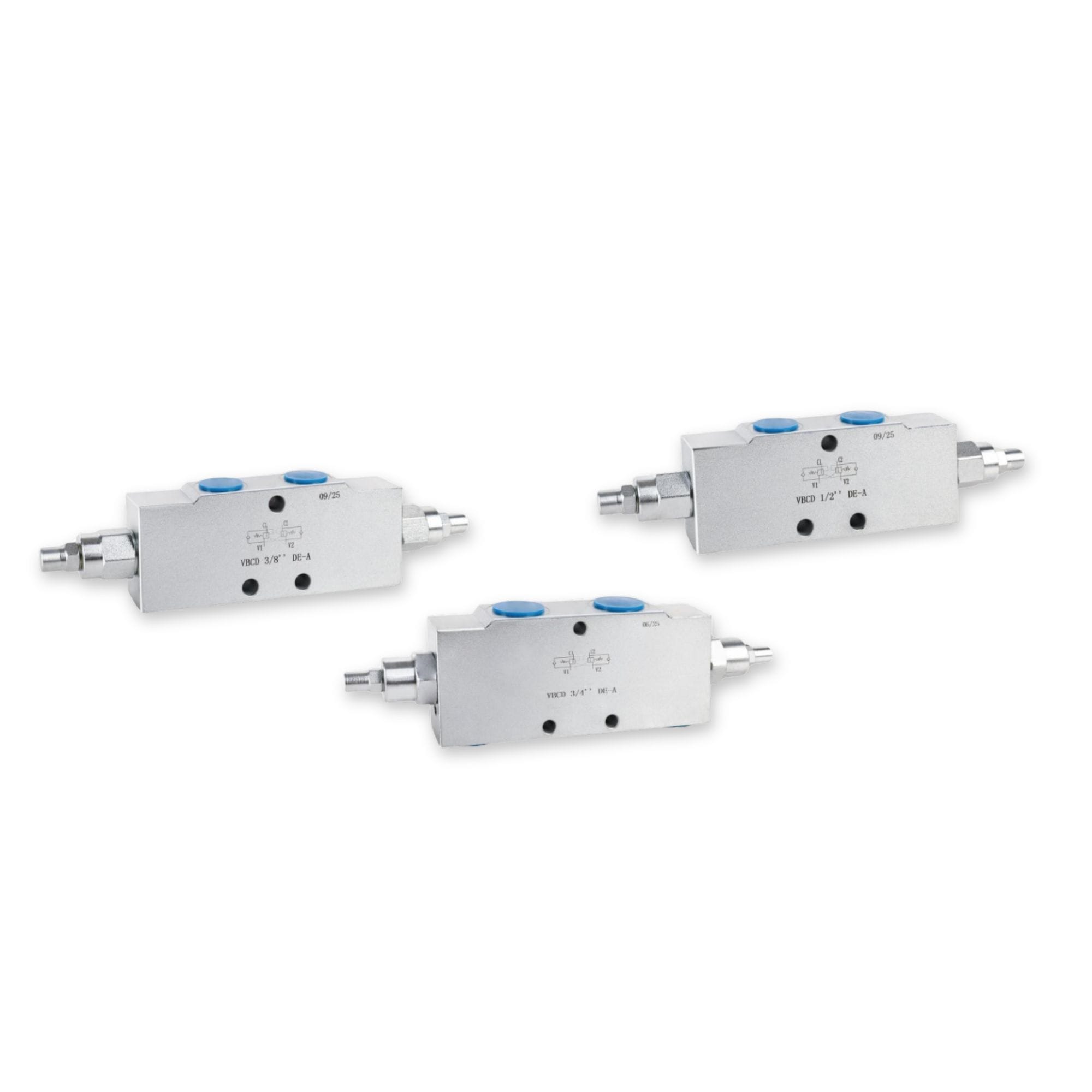
A counterbalance valve is an important hydraulic control valve used in systems where load holding, controlled movement and safety are critical.
In agricultural machinery, construction equipment and mobile hydraulic systems, loads are often affected by gravity, machine movement or external force. If the hydraulic circuit does not control the load properly, a cylinder may drop too quickly, a boom may drift down, or a hydraulic motor may overrun under load.
A counterbalance valve is designed to help prevent uncontrolled load movement. It is also commonly called a load holding valve in many hydraulic applications.
This guide explains how a counterbalance valve works, where it is used, and what information buyers should prepare when selecting or replacing one.
How Does a Counterbalance Valve Work?
A counterbalance valve can be understood as a combination of a check valve and a pilot-operated pressure control valve.
Its job is simple in concept: allow oil to flow freely in one direction, but control or restrict oil flow in the opposite direction until pilot pressure opens the valve.
This helps the hydraulic system hold and lower the load in a controlled way.
Forward Flow: Moving or Lifting the Load
When oil flows into the actuator to lift or move a load, the internal check valve allows relatively free flow to the hydraulic cylinder or hydraulic motor.
For example, when a cylinder lifts a boom or attachment, oil can flow into the cylinder and move the load upward.
In this direction, the counterbalance valve does not normally create heavy restriction.
Reverse Flow: Holding or Lowering the Load
When the load needs to move in the opposite direction, the valve does not simply allow oil to return freely. Instead, pilot pressure from the other side of the circuit is required to open the valve.
This controlled opening is important.
If the load tries to move faster than the pump flow, pilot pressure may decrease and the valve opening can become smaller. This helps slow down the load and reduces the risk of uncontrolled movement.
In practical terms, the counterbalance valve works like a hydraulic brake. It does not replace proper system design, but it is a key component for controlled load movement.
Three Core Functions of a Counterbalance Valve
Load Holding
One of the main functions of a counterbalance valve is load holding.
When a hydraulic cylinder supports a boom, platform, loader arm or attachment, the valve helps hold the load in position. This can reduce unwanted movement when the directional valve is in neutral position.
In lifting applications, load holding is important for both machine stability and operator safety.
Controlled Lowering
When a heavy load is lowered, gravity may try to pull the load down faster than the hydraulic pump can control it.
Without proper control, this may cause vibration, sudden movement or unstable operation. A counterbalance valve helps create controlled back pressure so that lowering speed remains more stable.
This is especially important in cranes, aerial work platforms, loader arms, agricultural machinery and other machines that lift or lower heavy parts.
Overrunning Load Control
An overrunning load happens when the load drives the actuator instead of the pump driving the load.
This can occur in hydraulic cylinder circuits and hydraulic motor circuits. For example, in a winch system, the weight of the load may try to rotate the hydraulic motor faster than the pump flow allows.
A counterbalance valve helps control this condition by resisting uncontrolled oil flow from the actuator.
Common Applications in Agricultural and Mobile Machinery
Counterbalance valves are widely used in mobile machinery, agricultural equipment and industrial hydraulic systems.
They are especially important when the machine must lift, lower, hold or control heavy loads.
Agricultural Machinery
In agricultural machinery, counterbalance valves can be used in systems such as header lift cylinders, front loaders, attachments and lifting mechanisms.
For example, a combine harvester header or tractor front loader may need to stay in position during operation or maintenance. A correctly selected counterbalance valve can help hold the cylinder and reduce uncontrolled lowering.
Construction Machinery
Construction machinery often uses hydraulic cylinders to move booms, arms, attachments and lifting structures.
Counterbalance valves are commonly used in excavator attachments, lifting cylinders, loader systems and other circuits where load holding and controlled movement are required.
Cranes and Aerial Work Platforms
Cranes and aerial work platforms require stable movement and reliable load control.
Counterbalance valves are commonly used in boom cylinders, telescopic cylinders and platform movement circuits. In these applications, the valve helps control lowering movement and supports safer operation.
Hydraulic Winch Systems
Hydraulic winches often use hydraulic motors to lift, pull or lower loads. In these systems, the load may try to drive the motor during lowering.
A counterbalance valve can help control the load and reduce the risk of free running.
When used together with BM series orbital hydraulic motors in winch or drive applications, a suitable counterbalance valve can support smoother stopping, better load control and more stable operation.
Hydraulic Motor Drive Circuits
Some hydraulic motor circuits also require counterbalance valves, especially when the motor may be driven by the load.
In these applications, the valve helps prevent overspeed and improves circuit stability.
Key Parameters for Selecting a Counterbalance Valve
Choosing a counterbalance valve requires more than checking the outside appearance. Several technical parameters should be confirmed before ordering.
Application
The first question is where the valve will be used.
A valve for a lifting cylinder may not be the same as a valve for a hydraulic motor circuit. Buyers should explain the machine type, actuator type and load movement.
Useful application information includes:
- Machine type
- Hydraulic cylinder or motor application
- Load direction
- Lifting, lowering or holding function
- One-way or two-way control requirement
- Replacement use or new hydraulic system
Pilot Ratio
Pilot ratio affects how the valve opens under pilot pressure.
Common pilot ratios may include 3:1, 4:1 or 8:1, depending on valve design and application. A higher pilot ratio may require less pilot pressure to open the valve, while a lower pilot ratio can provide more stable control in some load conditions.
The correct pilot ratio depends on the hydraulic circuit, load stability and machine design. It should not be selected only by price or outside size.
Pressure Setting
The pressure setting is another key factor.
A common selection approach is to set the valve above the maximum load-induced pressure, often using a safety margin according to the system design. In many applications, engineers may start around 1.3 times the load pressure, but the final setting should always be confirmed according to the actual machine and circuit requirements.
If the setting is too low, the load may not be held properly. If the setting is too high, the system may become inefficient or difficult to control.
Flow Capacity
The valve flow capacity should match the hydraulic system flow.
If the valve is too small, it may create pressure loss, heat and unstable movement. If the valve is too large, control precision may be reduced in some applications.
Buyers should provide flow rate if available.
Port Size and Thread Type
Port size and thread type must match the hydraulic hose, manifold or valve block.
Before ordering, please check:
- Port size
- Thread type
- Port position
- Valve body style
- Connection method
- Installation space
For replacement applications, clear photos of the oil ports are very helpful.
Mounting Style
Counterbalance valves can be supplied in different mounting styles, such as inline type, cartridge type or valve block type.
The mounting style should match the machine installation position and hydraulic circuit design.
Single-Direction and Double-Direction Counterbalance Valves
Single-Direction Counterbalance Valve
A single-direction counterbalance valve controls load movement in one direction.
It is commonly used in cylinder circuits where load holding or controlled lowering is required in one direction.
Double-Direction Counterbalance Valve
A double-direction counterbalance valve controls movement in both directions.
It is often used in hydraulic motor circuits, bidirectional cylinder circuits or applications where load control is required on both sides of the circuit.
Replacement Applications
Counterbalance valves are often replaced during machine repair or hydraulic system maintenance.
For replacement orders, it is not recommended to choose a valve only by appearance. Similar-looking valves may have different pressure settings, pilot ratios, flow ratings, internal structures or thread types.
To confirm a suitable replacement, buyers should provide:
- Existing valve model number
- Photos of the valve body
- Photos of all ports
- Hydraulic circuit drawing, if available
- Pressure setting, if marked
- Port thread size
- Application details
- Machine type
- Quantity required
If the old valve has no clear model number, photos and dimensions become more important.
Common Selection Mistakes
One common mistake is choosing a counterbalance valve only by size.
Another mistake is using the same valve for different machines without checking load conditions, pressure setting and pilot ratio.
A third mistake is ignoring thread type. Even when the valve function is correct, wrong port threads can cause installation problems and delays.
Information to Provide Before Requesting a Quote
To help confirm the correct counterbalance valve, please provide:
- Valve type, if known
- Existing model number
- Nameplate or marking photos
- Valve body photos
- Port photos
- Port size and thread type
- Working pressure
- Flow rate, if known
- Pilot ratio, if required
- Pressure setting, if required
- Single-direction or double-direction requirement
- Application details
- Machine type
- Quantity required
- Destination country
A clear inquiry helps reduce repeated confirmation and improves quotation accuracy.
Example Inquiry
A practical inquiry may look like this:
“We need a counterbalance valve for a hydraulic cylinder on construction machinery. Please check the attached photos of the old valve, port size and installation position. The machine needs controlled lowering and load holding. Required quantity is 20 pcs. Destination country is Kazakhstan. Please quote price and lead time.”
This type of inquiry is easier to process than only asking, “Please send price for counterbalance valve.”
Conclusion
A counterbalance valve is used to hold loads, control lowering movement and prevent overrunning in hydraulic systems. It is widely used in agricultural machinery, construction machinery, lifting equipment, winch systems and mobile hydraulic applications.
Correct selection depends on application, working pressure, flow rate, pressure setting, pilot ratio, port size, thread type and mounting style.
For replacement orders, the safest method is to provide the existing model number, photos, port details, drawings or application information. If you are not sure which counterbalance valve is suitable, send us your valve photos, model number or hydraulic circuit details. YUNLINK HYDRAULICS can help check suitable hydraulic valve options for your machine or spare parts requirement.