
Hydraulic Components Quote Preparation
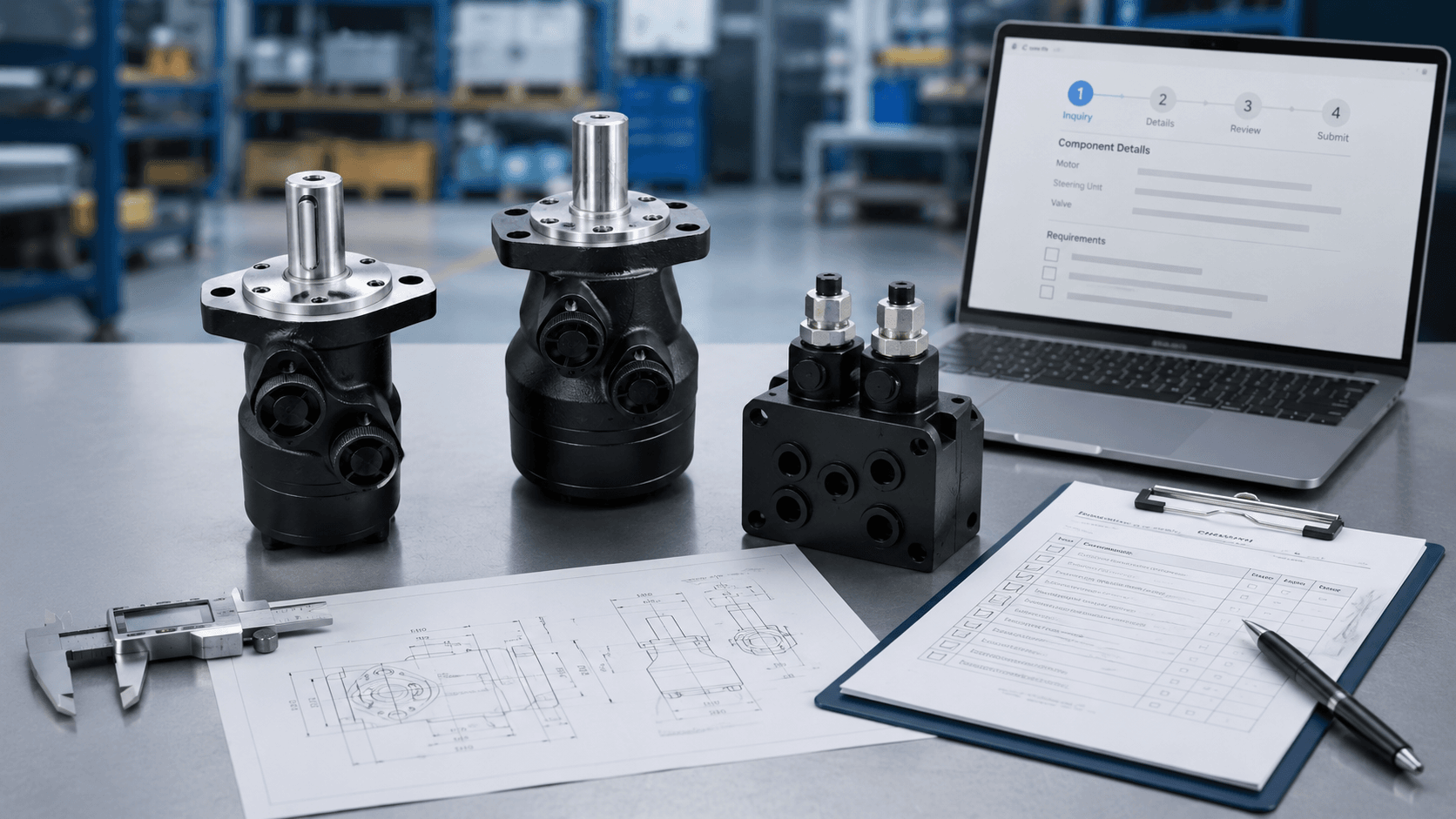
A hydraulic components quote is more accurate when buyers provide the correct model, photos, dimensions, pressure, flow and application details. Requesting a quote for hydraulic components is not only about asking for a price. Products such as orbital hydraulic motors, hydraulic steering units and hydraulic valves are technical parts used in hydraulic systems, mobile machinery and industrial equipment.
A simple inquiry such as “Please quote hydraulic motor” is usually not enough for accurate selection. Hydraulic components may look similar from the outside, but small differences in displacement, shaft type, flange, port thread, pressure setting or flow capacity can affect installation and performance.
This guide provides a practical RFQ checklist for buyers, distributors and maintenance teams. By preparing the right information before sending an inquiry, you can reduce repeated communication, avoid wrong model selection and receive a more accurate quotation faster.
Why Accurate RFQ Information Matters
Hydraulic components are used in systems where pressure, flow, torque, load holding and steering performance are important. If the product is selected only by appearance or a short description, there is a higher risk of mismatch.
For example, two orbital hydraulic motors may have a similar body shape but different displacement, shaft dimensions or mounting flanges. Two hydraulic valves may look alike but have different pressure settings, pilot ratios, port threads or internal functions.
Clear RFQ information helps the supplier:
- Identify the correct product type
- Check suitable replacement options
- Confirm key technical parameters
- Reduce repeated questions
- Provide a more accurate quotation
- Estimate lead time and shipping options more clearly
For OEM buyers, spare parts distributors and repair companies, a complete inquiry can save time and improve purchasing efficiency.
Essential Technical Specifications
The required technical information depends on the product type. The following sections explain what buyers should prepare for different hydraulic components.
For Orbital Hydraulic Motors
When requesting a quote for orbital hydraulic motors, the most important information includes displacement, shaft type, mounting flange, port connection and application details.
Please prepare:
- Existing motor model number
- Displacement, such as cc/rev
- Shaft type, such as straight shaft, splined shaft or tapered shaft
- Shaft diameter and shaft length
- Mounting flange type
- Bolt hole distance and pilot diameter
- Port size and thread type
- Working pressure and flow, if known
- Machine type and application
- Photos of the old motor
For BM series motors, such as BM2, BMH, BMM, BMSY, BMT and BMV series, shaft and flange details are especially important for replacement checking.
For Hydraulic Steering Units
Hydraulic steering units are commonly used in agricultural machinery, forklifts, construction machinery and other mobile equipment. Correct displacement and port connection should be confirmed before replacement.
Please prepare:
- Existing steering unit model number
- Displacement
- Port type and thread size
- Mounting dimensions
- Steering column or connection details
- Machine type
- Photos of the existing steering unit
If the old unit has a nameplate or printed code, please include a clear photo. This can make replacement checking much faster.
For Hydraulic Valves
Hydraulic valves include counterbalance valves, relief valves, hydraulic locks, flow divider valves, high-pressure ball valves and valve blocks. Different valves may have different internal functions even when the outside shape looks similar.
Please prepare:
- Valve type, if known
- Existing model number
- Pressure setting, if marked
- Flow rate, if known
- Port size and thread type
- Single-direction or double-direction requirement, if applicable
- Pilot ratio, if required for counterbalance valves
- Control method, if applicable
- Hydraulic circuit drawing, if available
- Photos of valve body and oil ports
For counterbalance valves, the pilot ratio and pressure setting should be checked carefully. For relief valves and flow control valves, pressure and flow information are especially important.
For Gear Pumps and Related Components
If your inquiry includes gear pumps or related hydraulic components, please provide rotation direction, displacement, pressure and port connection details.
Useful information includes:
- Existing pump model number
- Rotation direction, such as clockwise or counterclockwise
- Displacement
- Working pressure
- Shaft type
- Mounting flange
- Port size and thread type
- Photos of the old pump
If the product is not listed on the website, you can still send photos, model numbers or drawings for checking.
Nameplates, Photos and Application Context
For replacement parts, the nameplate photo is often one of the most useful pieces of information. It may include the model number, manufacturer code, displacement, pressure rating or OEM number.
Please try to provide clear photos of:
- Nameplate or product marking
- Front view
- Side view
- Rear view
- Shaft or connection side
- Oil ports
- Mounting side
- Installation position on the machine
Photos should be clear and taken in good lighting. If possible, include a ruler or measuring tool when taking photos of shafts, flanges or port positions.
Application Context
The same hydraulic component may be used in different working conditions. Application details help the supplier understand how the product will work in the system.
Please describe:
- Machine type
- Industry
- Function of the component
- Working load
- Continuous or intermittent operation
- Replacement part or new project
- Any special environment, such as dust, low temperature or high temperature
For example, a hydraulic motor used on a light conveyor is different from a motor used on agricultural machinery, construction equipment or winch systems.
Technical Dimensions to Confirm
Dimensions are often as important as the model number. Even when the product series is correct, a wrong shaft, flange or port thread may prevent installation.
Useful dimensions include:
- Overall length
- Mounting flange size
- Bolt hole distance
- Pilot diameter
- Shaft diameter
- Shaft length
- Keyway or spline details
- Port size
- Thread type
- Center distance between ports
- Installation space
If you have a drawing, it is best to send it together with the inquiry. Drawings can reduce misunderstanding and improve quotation accuracy.
Business Terms and Logistics Requirements
In addition to technical information, commercial details are also important for a complete quotation.
Order Quantity
Please tell the supplier whether the inquiry is for a sample order, trial order or regular bulk order.
Different quantities may affect pricing, production planning and packaging method. For distributors or regular buyers, it is helpful to share estimated annual demand or frequently purchased models.
Expected Delivery Time
If your project has a target delivery date, please mention it in the inquiry.
This helps the supplier check production schedule, stock availability and shipping options. For urgent replacement orders, clear timing information can help both sides make faster decisions.
Destination Country and Shipping Method
Please provide the destination country or delivery address. If you have a preferred shipping method, such as air shipment, sea shipment or express delivery, include it in the inquiry.
If you need assistance with shipping, please also mention whether you prefer EXW, FOB, CIF, DAP or another trade term.
Packaging Requirements
If you have special packaging requirements, such as neutral packaging, distributor labels, wooden cases or pallet packing, please tell the supplier in advance.
Packaging requirements may affect cost, delivery time and shipping arrangement.
Replacement or OEM Requirement
Please clearly explain whether the product is for replacement use or OEM production.
Replacement Applications
For replacement applications, the main goal is to match the old product dimensions and function. The supplier needs to check model number, photos, shaft, flange, ports and working conditions.
It is not recommended to choose a replacement product only by appearance. Similar-looking products may have different internal specifications.
OEM or New Project Applications
For OEM or new hydraulic system projects, the supplier may need more technical information, such as system pressure, flow, duty cycle, installation space, drawings and performance requirements.
If special shaft, flange, port or valve block design is required, please provide drawings or samples when possible.
Common RFQ Mistakes to Avoid
One common mistake is sending only a short message such as “Please quote hydraulic motor” without model number, photos or application details.
Another common mistake is sending only one front photo. This may not show the shaft, flange, port thread or installation details.
A third mistake is assuming that similar-looking hydraulic components are interchangeable. In hydraulic systems, small differences in dimensions, pressure settings or internal structure can affect installation and performance.
To avoid delays, it is better to send all available information at the beginning of the inquiry.
RFQ Quick Checklist
Before requesting a quote, you can prepare the following information:
- Product type
- Existing model number
- Nameplate photo
- Photos from different angles
- Technical dimensions
- Pressure and flow information
- Shaft, flange and port details
- Machine type and application
- Replacement or OEM requirement
- Required quantity
- Destination country
- Expected delivery time
- Preferred shipping or trade term
- Drawing or OEM number, if available
This checklist can help both the buyer and supplier work more efficiently during the quotation process.
Example of a Clear Hydraulic Components Inquiry
A clear inquiry for a hydraulic motor may look like this:
“We need an orbital hydraulic motor for agricultural machinery replacement. Please check the attached nameplate photo, shaft photo, port photo and mounting dimensions. The old motor is BM series type. Required quantity is 10 pcs. Destination country is Kazakhstan. Please quote price, lead time and shipping option.”
A clear inquiry for a hydraulic valve may look like this:
“We need a counterbalance valve for a hydraulic cylinder on construction machinery. Please check the attached valve photos and port details. The system requires load holding and controlled lowering. Required quantity is 20 pcs. Please quote price and lead time.”
These inquiries are much easier to process than only asking for a general price.
Conclusion
A good hydraulic components inquiry should include product type, model number, photos, dimensions, pressure, flow, application details, quantity and delivery requirement.
Clear information helps reduce repeated confirmation, avoid wrong selection and improve quotation speed.
Whether you need hydraulic motors, steering units, valves or replacement parts, the safest method is to provide the existing model number, photos, drawings and application information. If you are not sure what information is required, send us your available photos, model number or application details. YUNLINK HYDRAULICS can help check suitable hydraulic components for your machine or spare parts requirement.
Using a hydraulic components quote checklist helps suppliers confirm compatibility, reduce repeated communication and prepare a more accurate quotation.