
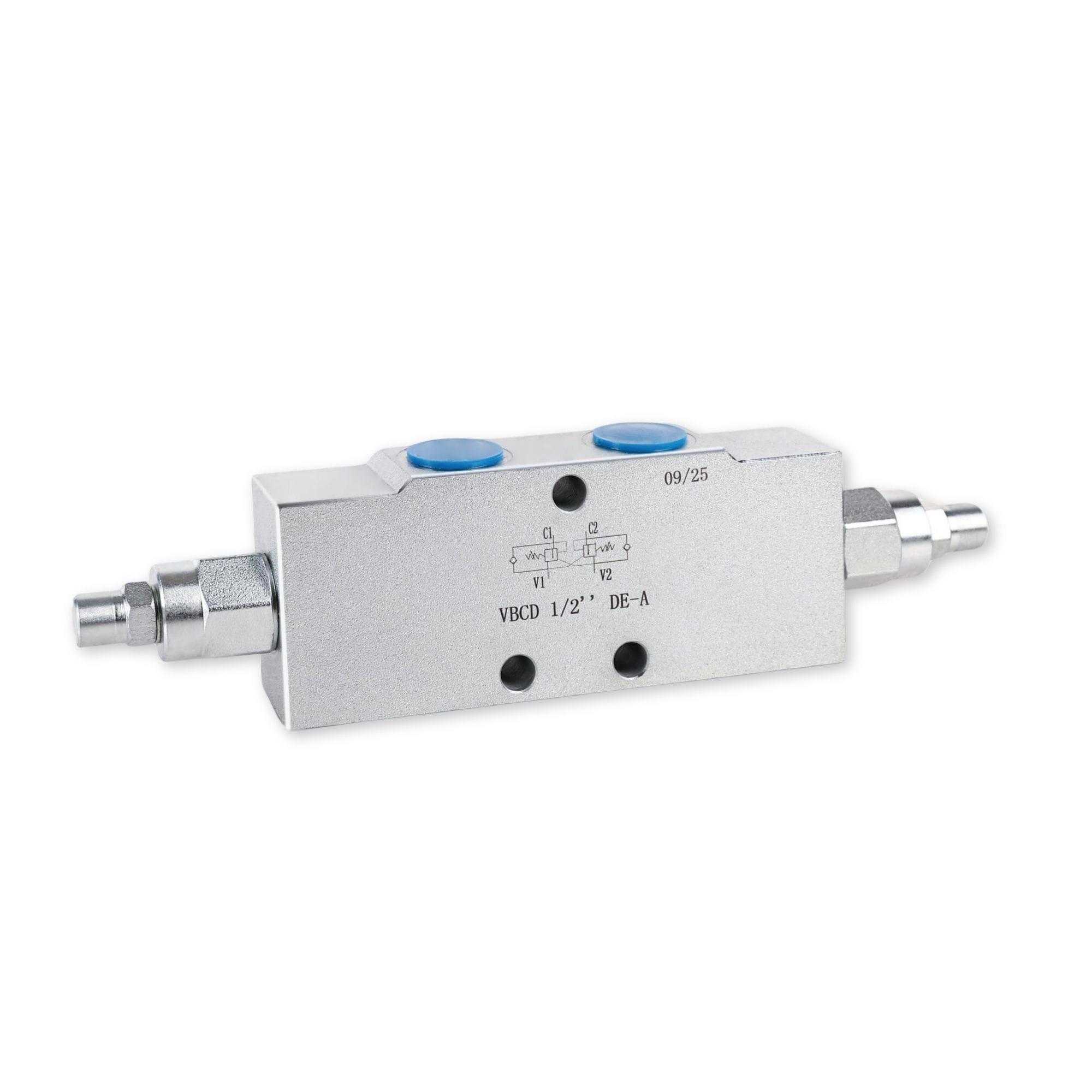

This counterbalance valve selection guide explains how to choose load-control valves for mobile machinery and hydraulic cylinder circuits. Counterbalance valves are important hydraulic control components used in mobile machinery, lifting systems and hydraulic cylinder circuits. They help control load movement, prevent uncontrolled lowering and improve the stability of hydraulic systems working with overrunning or suspended loads.
For machinery dealers, repair companies, hydraulic system integrators and spare parts buyers, selecting the correct counterbalance valve is not only about matching the appearance of an existing valve. Application details, pressure range, flow rate, pilot ratio, port size, installation space and hydraulic circuit requirements should all be checked before ordering.
This guide explains the key factors to consider when selecting a counterbalance valve for agricultural machinery, construction equipment, lifting platforms and other mobile hydraulic systems. For more hydraulic component resources, you can also review YUNLINK technical guides for hydraulic motors, steering units and valves.
What Is a Counterbalance Valve?
A counterbalance valve is a pressure control valve used to hold and control a load in a hydraulic circuit. It is commonly installed in circuits where a hydraulic cylinder or actuator may be affected by gravity, external force or overrunning load.
The main functions of a counterbalance valve include:
- Holding a load in position
- Preventing uncontrolled cylinder movement
- Controlling lowering speed
- Improving safety in lifting circuits
- Reducing instability caused by overrunning loads
A counterbalance valve is different from a simple check valve. A check valve allows flow in one direction and blocks reverse flow. A counterbalance valve provides load holding and controlled movement through pressure and pilot operation.
Where Are Counterbalance Valves Used?
Counterbalance valves are widely used in hydraulic systems where load control and controlled movement are required.
Common applications include:
- Construction and earthmoving machinery
- Agricultural equipment
- Cranes, lifting platforms and attachments
- Industrial material handling systems
- Mobile hydraulic cylinder circuits
In these applications, the hydraulic system must control the movement of heavy loads safely and smoothly. A properly selected counterbalance valve helps improve system stability and reduce the risk of uncontrolled movement.
Key Factors When Selecting a Counterbalance Valve
Application and Load Type
The first step is to understand the application. Different machines and working conditions may require different valve configurations.
Customers should confirm the machine type, hydraulic cylinder function, load direction, lifting or lowering movement and whether the load may overrun the actuator.
A valve used for a lifting cylinder may have different requirements from a valve used in a holding or positioning circuit. For product reference, YUNLINK also supplies the VBCD double-direction counterbalance valve for load holding and lifting hydraulic systems.
Working Pressure
Working pressure is one of the most important selection factors. Before selecting a counterbalance valve, the system working pressure, maximum pressure, relief valve setting and required load holding pressure should be confirmed.
Selecting a valve only by appearance or port size may lead to incorrect performance if the pressure setting is not suitable for the system.
Flow Rate
Flow rate affects valve size, response and system stability. If the valve flow capacity is too small, the hydraulic system may experience excessive pressure drop, heat generation or unstable movement.
Customers should confirm the pump flow rate, cylinder flow requirement, maximum expected flow and operating speed requirements. If the exact flow rate is not available, machine model, cylinder size and application details can help with technical matching.
Pilot Ratio
Pilot ratio is an important parameter in counterbalance valve selection. It affects the pilot pressure required to open the valve and influences system control behavior.
A lower or higher pilot ratio may change how the valve responds during lowering or load control. The correct pilot ratio depends on the load condition, cylinder ratio and hydraulic circuit design.
For replacement matching, it is helpful to provide the existing valve model, nameplate, circuit diagram or photos of the installed valve.
Port Size and Thread Type
Port size and thread type must be checked carefully before ordering. Similar-looking valves may have different port standards.
Customers should confirm the port size, thread type, port position, connection method and valve body size. BSP, NPT and metric threads are not interchangeable, so clear photos of the valve ports and markings can reduce the risk of ordering the wrong part.
Mounting Space and Installation Position
Counterbalance valves are often installed in limited space near cylinders, manifolds or hydraulic pipelines. Before selecting a replacement valve, customers should check the overall valve dimensions, mounting position, port direction, hose connection and available clearance around the valve.
Photos from different angles are very useful for replacement matching.
Common Selection Mistakes
When selecting a counterbalance valve, avoid these frequent errors:
- Choosing only by appearance: Similar-looking valves often have different pressure settings and internal functions.
- Ignoring the pilot ratio: An unsuitable pilot ratio can cause unstable load movement.
- Overlooking port thread standards: BSP, NPT and metric threads are not interchangeable.
- Not checking flow capacity: Insufficient flow capacity may affect movement stability and system performance.
- Not checking installation space: The valve body and port directions must fit the machine’s available clearance.
YUNLINK Support for Counterbalance Valve Matching
YUNLINK HYDRAULICS supplies hydraulic valves for mobile machinery, agricultural machinery, lifting systems and industrial hydraulic applications.
For counterbalance valve selection or replacement matching, customers can send the existing valve model, photos, port size, pressure range, pilot ratio and application details. Our team can help check a suitable valve option based on the information provided.
If you are not sure which counterbalance valve is suitable for your hydraulic system, please contact YUNLINK HYDRAULICS with your application details.
Contact YUNLINK for valve selection support
FAQ
What is a counterbalance valve used for?
A counterbalance valve is used to hold and control loads in hydraulic systems. It helps prevent uncontrolled cylinder movement and improves stability in lifting, lowering and overrunning load circuits.
How do I choose the correct counterbalance valve?
To choose the correct counterbalance valve, confirm the application, working pressure, flow rate, pilot ratio, port size, thread type, installation space and existing valve information.
What is pilot ratio in a counterbalance valve?
Pilot ratio describes the relationship between pilot pressure and load pressure required to open the valve. It affects valve response, load control and system stability.